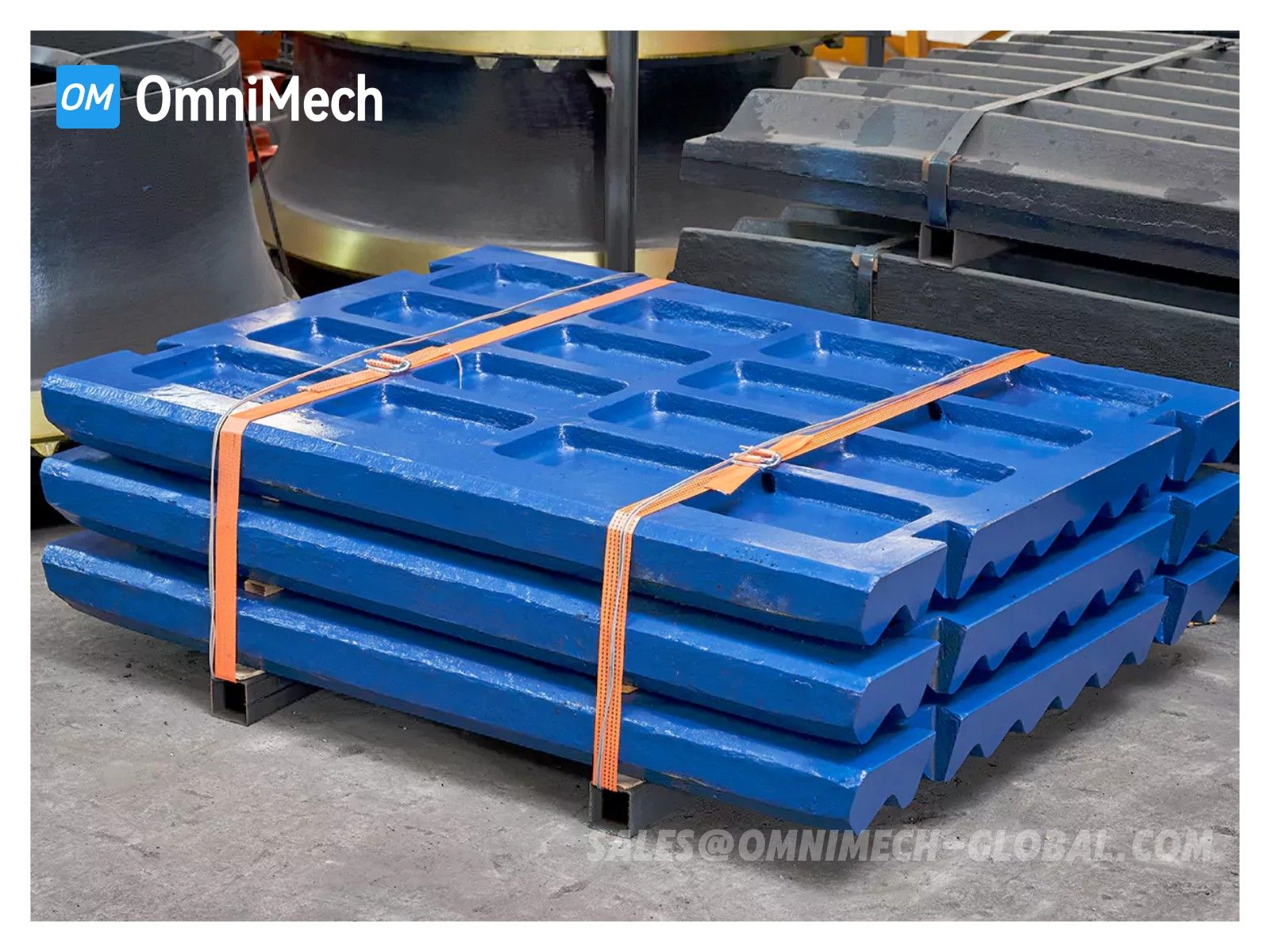
Core wear-resistant parts that directly participate in ore crushing inside the crushing chamber, operating under high impact and high abrasive wear conditions and directly affecting crushing efficiency and product size.
Notas de instalación
1. Before installation, check the tooth profile of jaw plates/cheek plates and mounting surfaces for casting defects and deformation; 2. Ensure the jaw plates fit tightly against the jaw body without gaps, tightening bolts diagonally in sequence to the specified torque; 3. Run a 30-minute no-load test, check for abnormal noise and vibration, and confirm uniform tooth gaps before feeding material.
Preguntas frecuentes
What is the typical service life of jaw plates (toothed plates)?
Under normal feed size and material hardness, the service life of Mn13Cr2 high-manganese steel jaw plates is typically 3-6 months, depending on material hardness, feed size, throughput and tooth profile design. Turning the plates over periodically can extend life by about 20%.
How to handle uneven wear of jaw plates?
When the jaw plate teeth show uneven wear or severe local wear, stop the machine and check whether the feed size is uniform and whether material is fed to the center of the crushing chamber. If wear exceeds half but has not reached the scrap limit, swap the fixed and moving jaw plates or turn them over.
Why do jaw plate bolts loosen and fracture easily?
Main causes include bolts not tightened diagonally in sequence to the specified torque during installation, gaps between the jaw plate and jaw body, and impact overload from oversized feed material. Regularly re-tighten bolts, check mating surfaces, and prefer high-strength bolts of grade 8.8 or above when replacing.